
GPT Image 2.6 vs Nano Banana Pro: 6 Prompts Tested (2026)
Short answer: We ran the same six prompts through GPT Image 2.6 Sunburst, GPT Image 2.6 Flare and Nano Banana Pro on November 8, 2026, kept the first image from each model and scored it against what the prompt asked for. Sunburst scored 22 out of 24, Flare 21 and Nano Banana Pro 18. GPT Image 2.6 followed layout, counting and "do not" instructions more closely, and Flare was about 2.7 times faster than Sunburst.
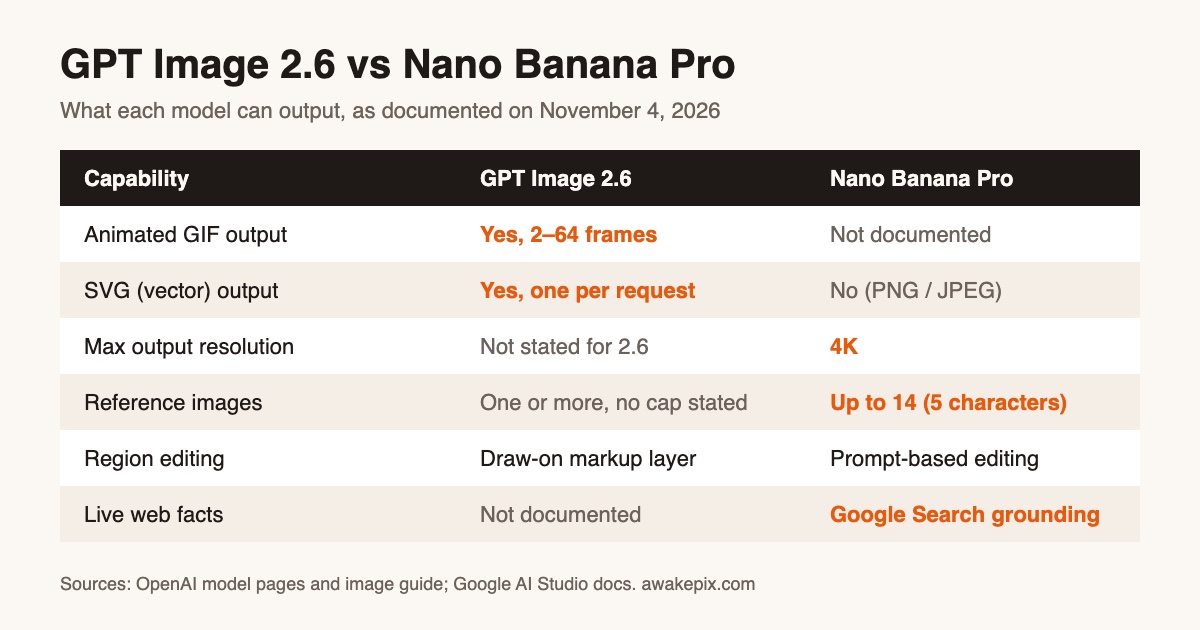
Use Flare for quick drafts, Sunburst when a layout has to be right, and Nano Banana Pro when you need the things Google documents and this test did not cover: 4K output, up to 14 reference images and Google Search grounding. Only GPT Image 2.6 offers animated GIF and SVG output.
Below: the scorecard, all six prompts and images, what changed in 2.6, the documented differences and which model to use.
GPT Image 2.6 vs Nano Banana Pro: test results
| Test | GPT Image 2.6 Sunburst | GPT Image 2.6 Flare | Nano Banana Pro |
|---|---|---|---|
| Course card (text layout) | 4 | 4 | 3 |
| Notice board (counting and text) | 4 | 3 | 2 |
| Perfume bottle (product photo) | 3 | 3 | 3 |
| Recipe card (strict text limits) | 3 | 3 | 3 |
| Greenhouse portrait | 4 | 4 | 4 |
| Pixel sprite sheet | 4 | 4 | 3 |
| Total out of 24 | 22 | 21 | 18 |
| Average time per image | 34.1 s | 12.4 s | 35.2 s |
All 18 requests completed on the first try. Time runs from submission to completion through an API gateway, checked every five seconds, so treat it as approximate.
How we tested
- Prompts: six text-to-image prompts from our public prompt library, sent unchanged to every model.
- First image only: one image per model per prompt, with no reruns and no cherry-picking.
- Scoring: one point each for correct text, correct counts and layout, the requested subject and scene, and no obvious distortion or unrequested elements. We wrote these four checks before generating anything.
- Settings: GPT Image 2.6 used medium quality, 1K, high complexity and PNG. Nano Banana Pro used its default settings on our integration.
- Size: Nano Banana Pro returned about twice the width and height (2048×2048 against 1024×1024 at 1:1). The images below are resized to the same width, and sharpness was not scored.
This is a small test scored by one reviewer. It shows how these models handled these six prompts, and it is not a general ranking.
Test 1: course card with three numbered sections
Create a 9:16 course card for a fictional workshop called ‘MAKE A ZINE’. Divide it into three numbered sections: PLAN, DRAW, SHARE. Give each section one simple icon and one short invented sentence. Use cobalt, apricot and paper white on a clean grid, with generous margins and strong type hierarchy. No real logos, tiny copy, photos or extra headings.
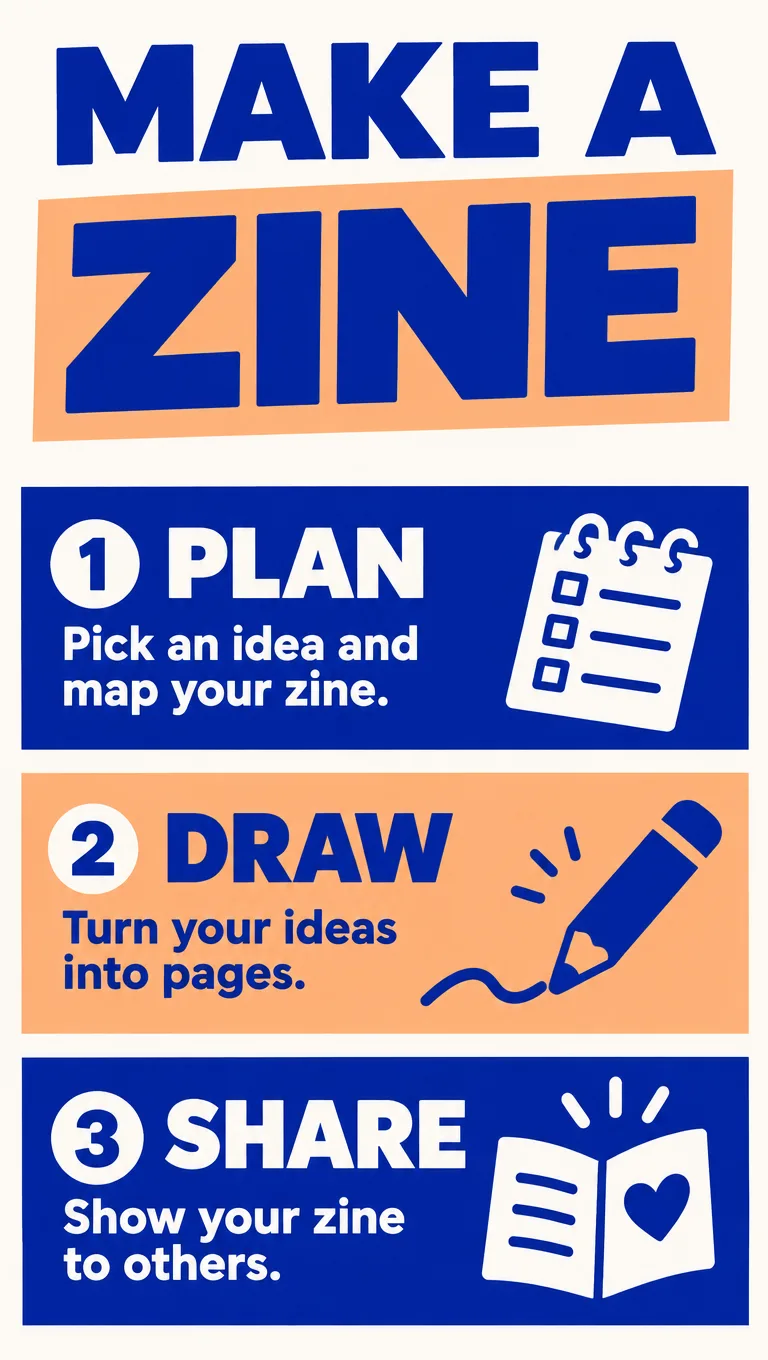
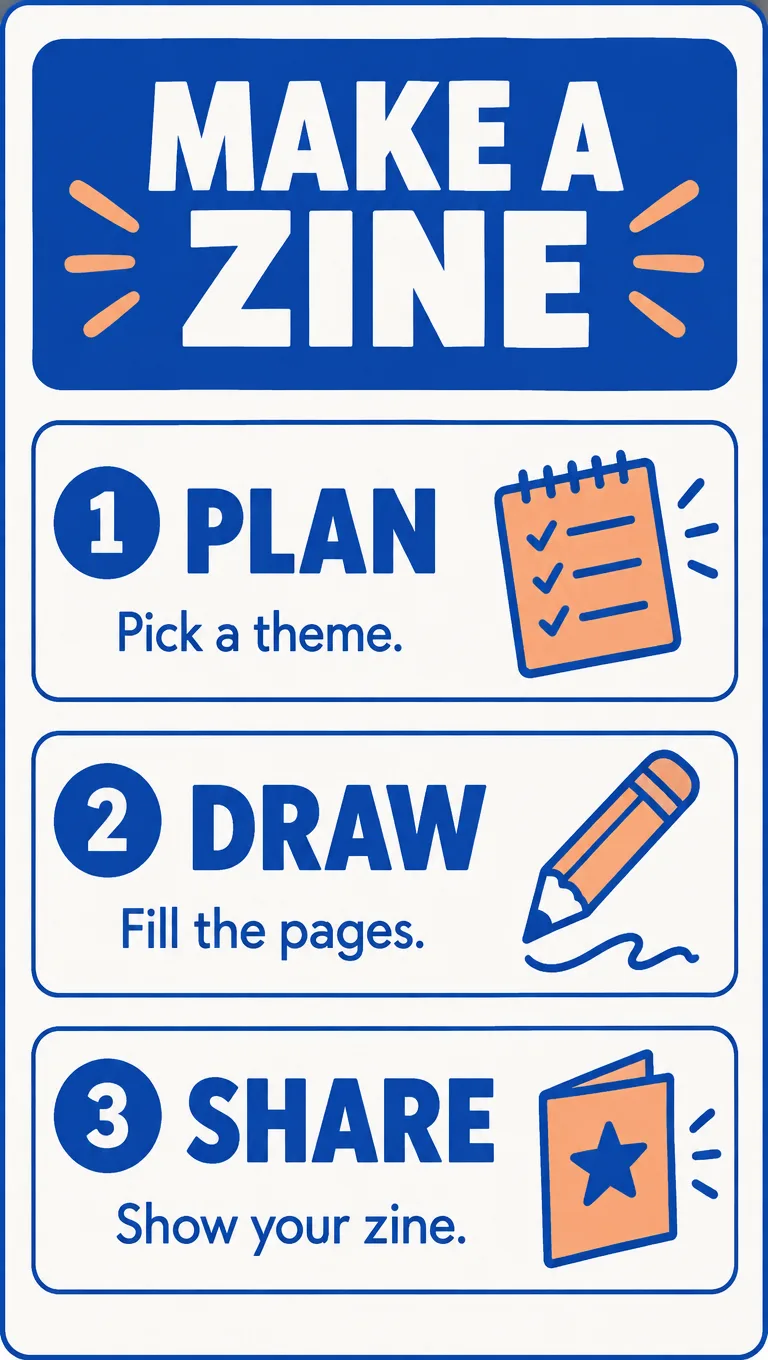
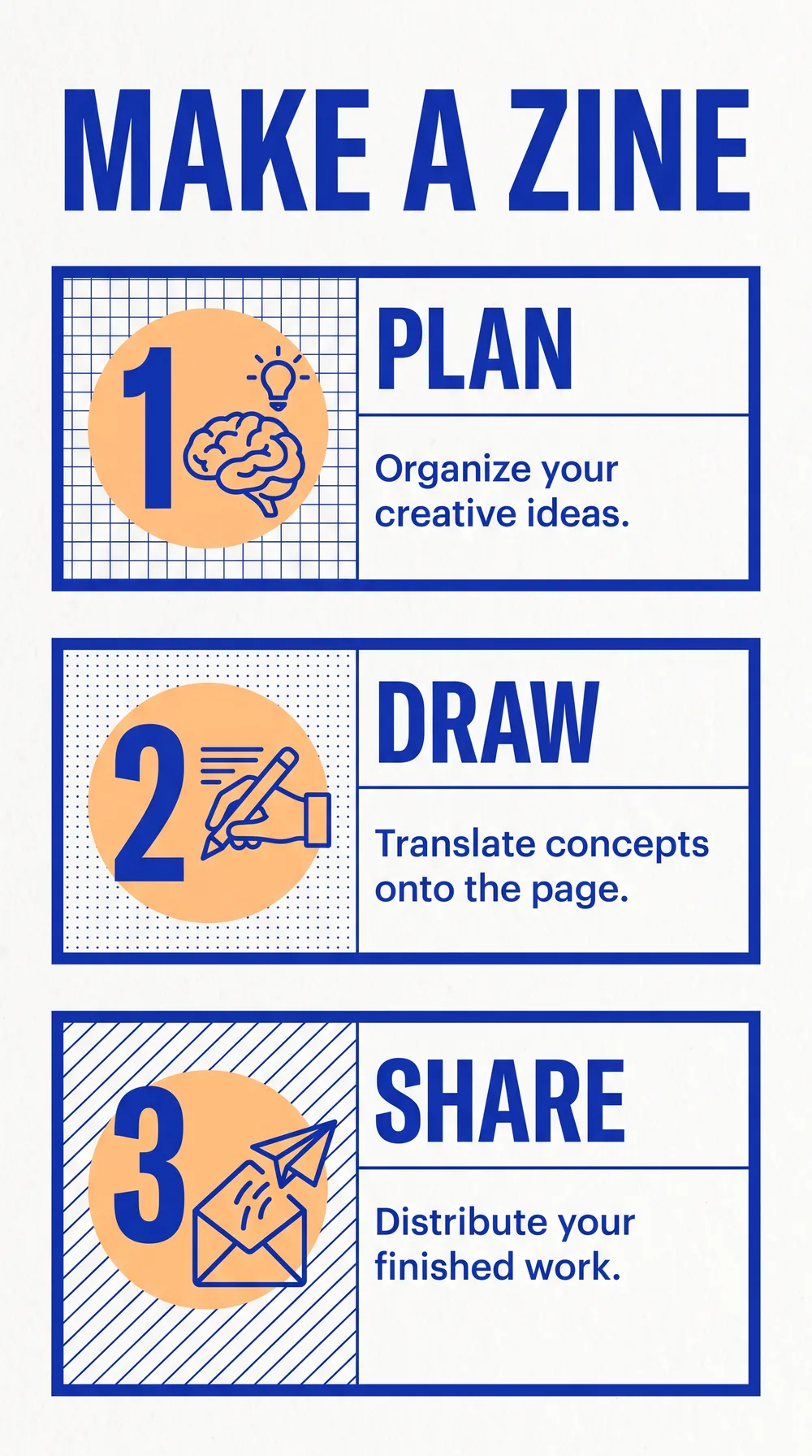
All three spelled every word correctly. Sunburst and Flare gave each section one icon as asked. Nano Banana Pro paired two icons in its sections, such as a brain with a light bulb.
Test 2: notice board with exactly five papers
Design a 16:9 fictional community notice board outside a small library. Pin exactly five papers: a choir flyer, a lost-cat card, a piano lesson note, a four-row bus timetable and one blank card. Use one clear heading, large simple type, soft overcast light and a tidy cork texture. Keep text invented and readable, with no real names, logos or extra papers.
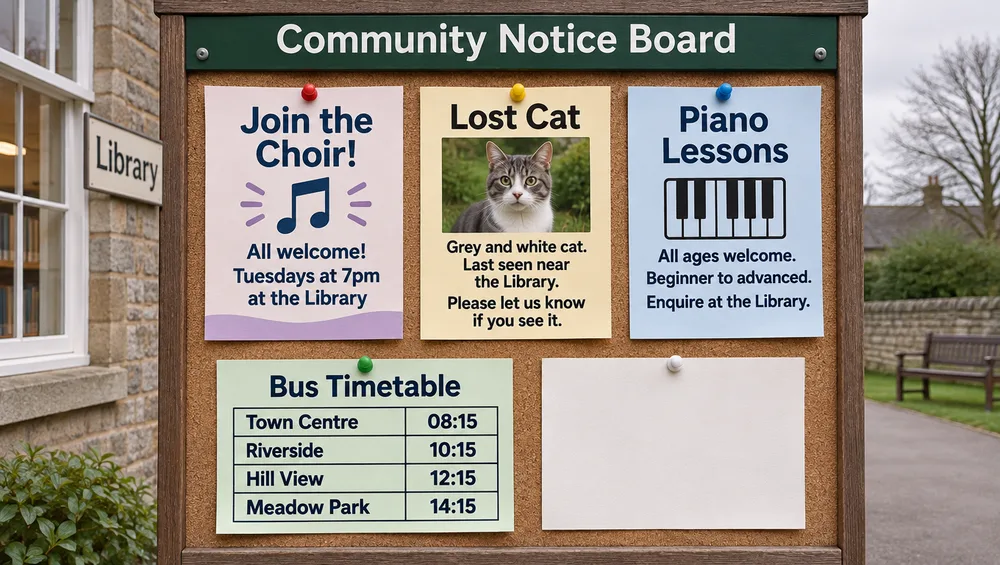
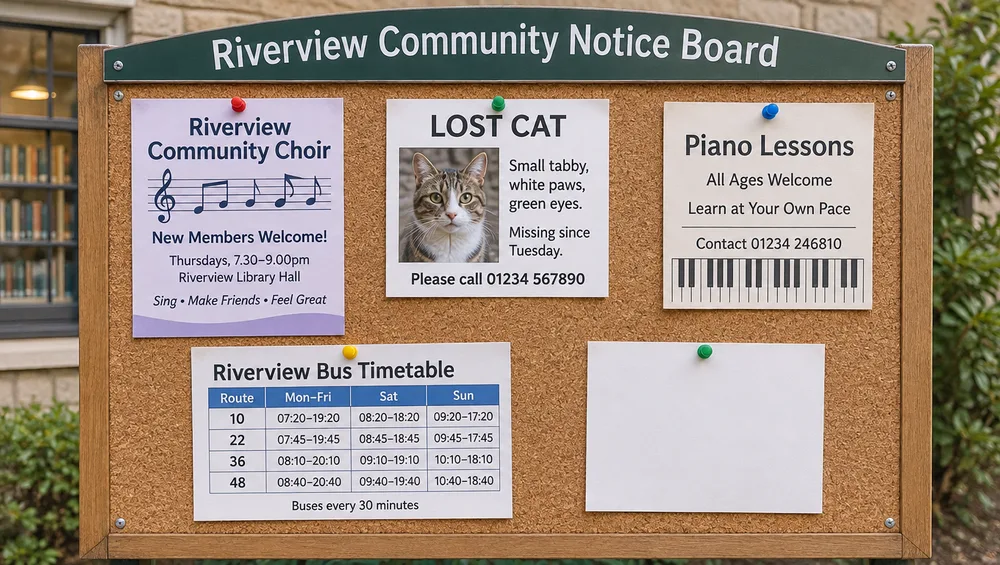
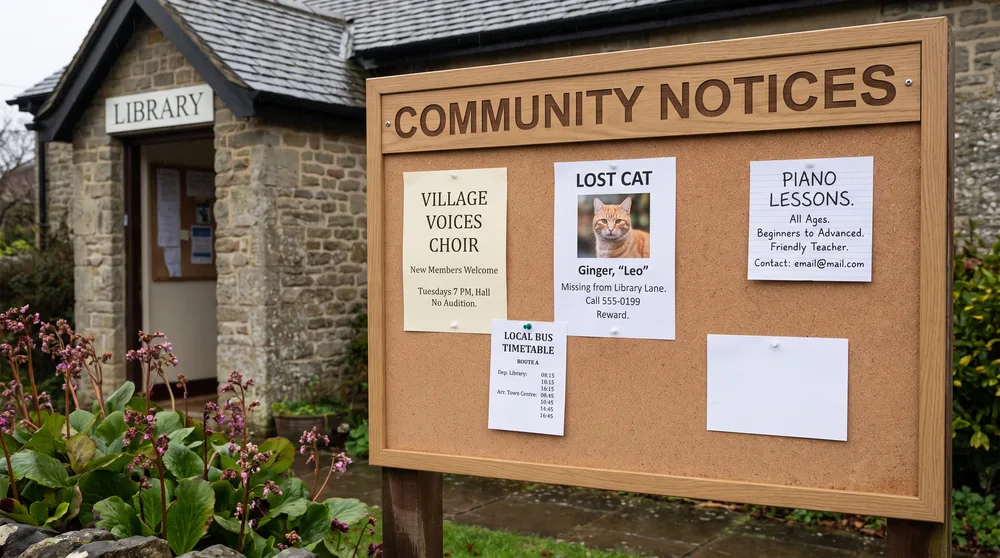
All three pinned exactly five papers, including one blank card. Sunburst was the only one to pair a four-row timetable with large, simple type. Flare's timetable had four rows, but its type was small. Nano Banana Pro's text was readable at full size, but its timetable had seven lines of times instead of four rows, and the type was small.
Test 3: product photo of a perfume bottle
Create a 1:1 premium product photograph of a fictional AwakePix coffee fragrance bottle, centered in a three-quarter view on a walnut slab. Add a few coffee beans, one folded linen cloth and a soft window shadow. Warm morning light, realistic glass and liquid, tactile label area with no readable brand text, shallow depth of field, quiet brown and cream palette. One bottle only, no hands and no extra packaging.
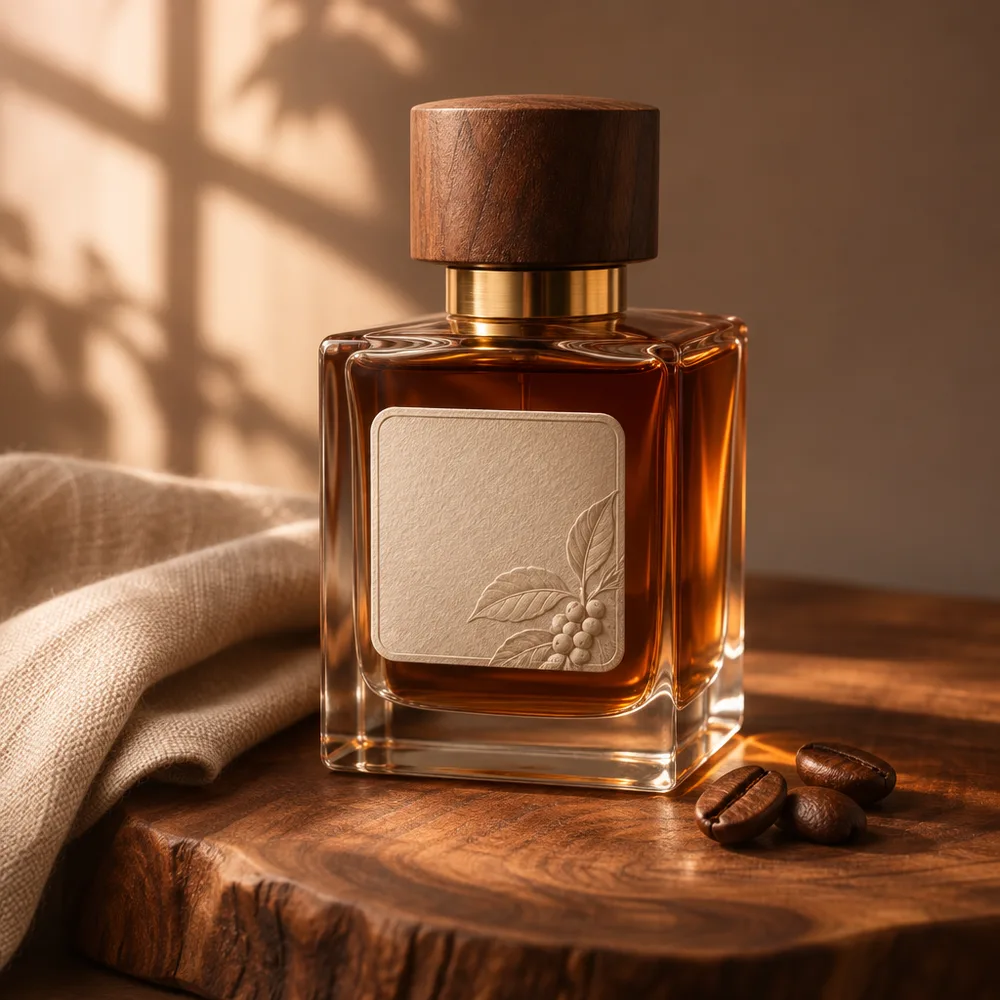
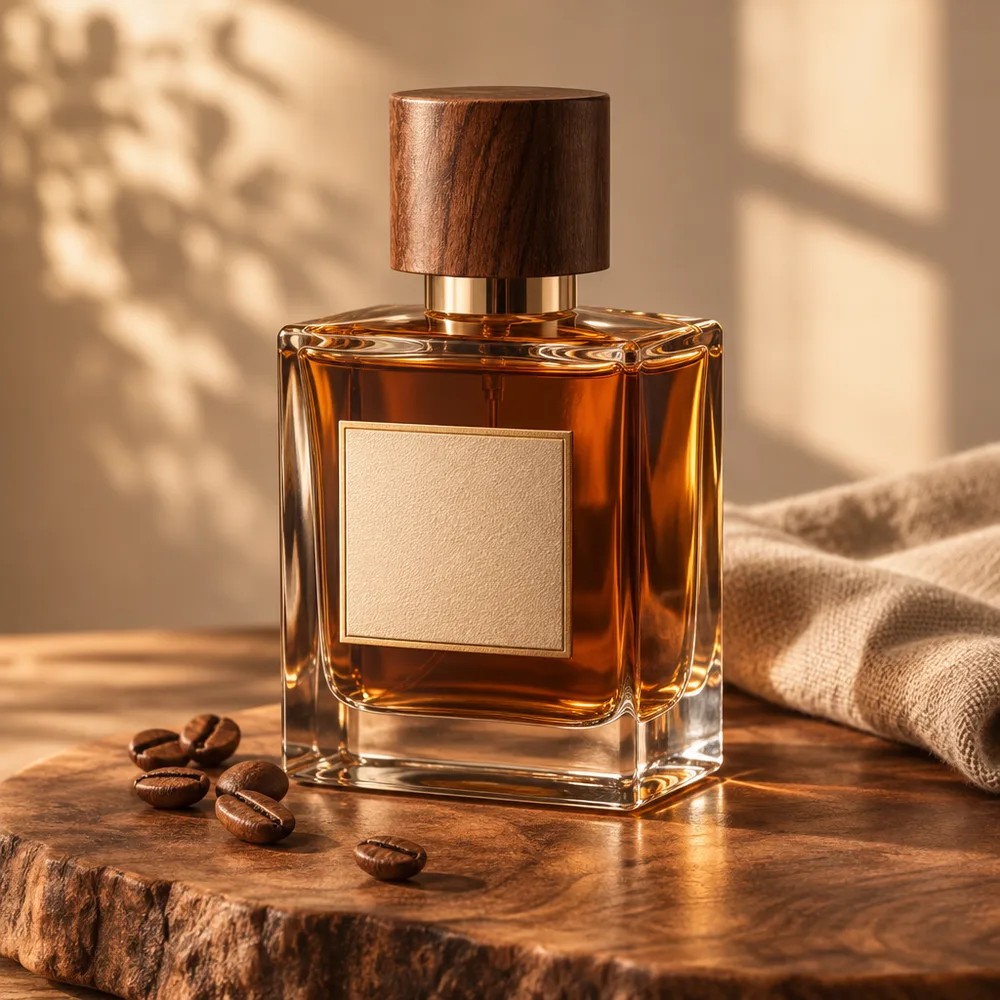
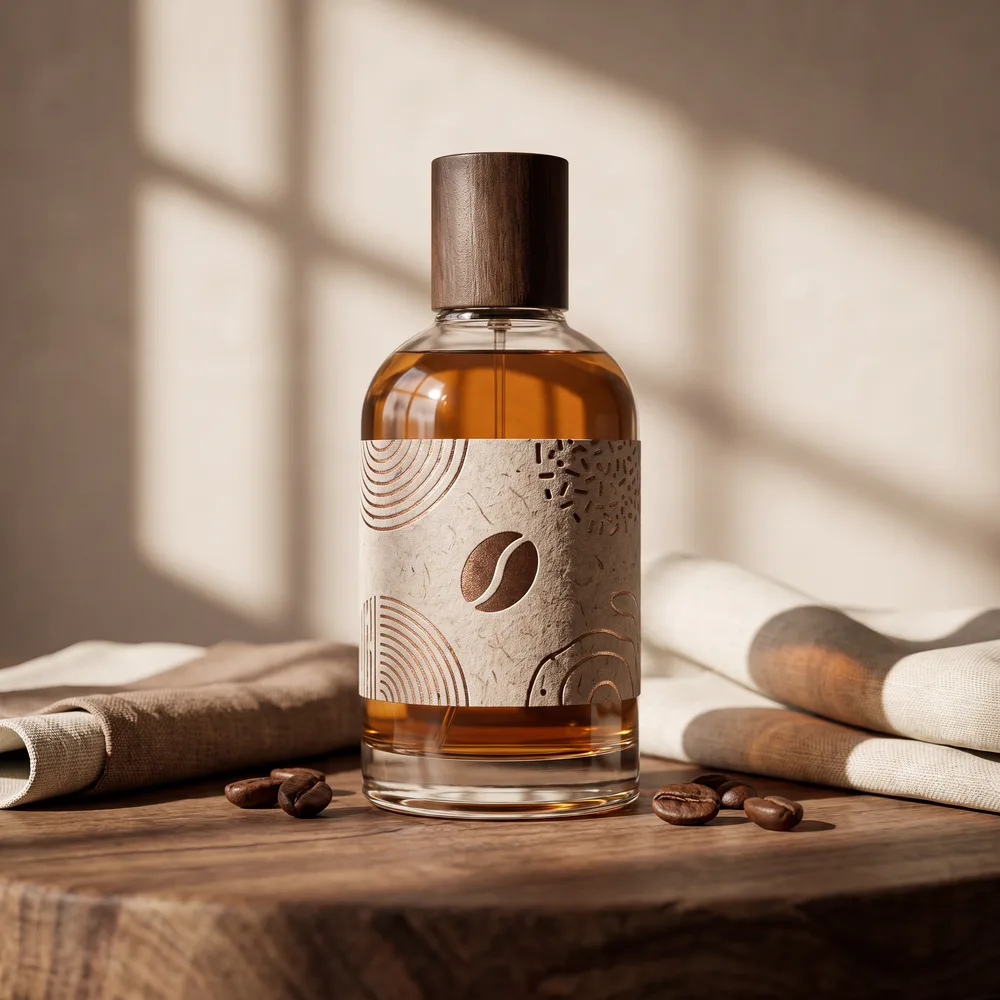
All three delivered one bottle, beans, linen and a window shadow with no readable brand text. None produced a clear three-quarter view, so each lost one point.
Test 4: recipe card with only three headings
Create a 1:1 social recipe card for fictional ‘LEMON BEAN TOAST’. Show three numbered panels: ingredients, stir, and serve. Use one bowl, lemon slices, white beans and toast as distinct objects, with a small finished plate in the last panel. Add only the headings ‘1 / GATHER’, ‘2 / STIR’, ‘3 / SERVE’. Warm tabletop light, no brand, people or extra text.
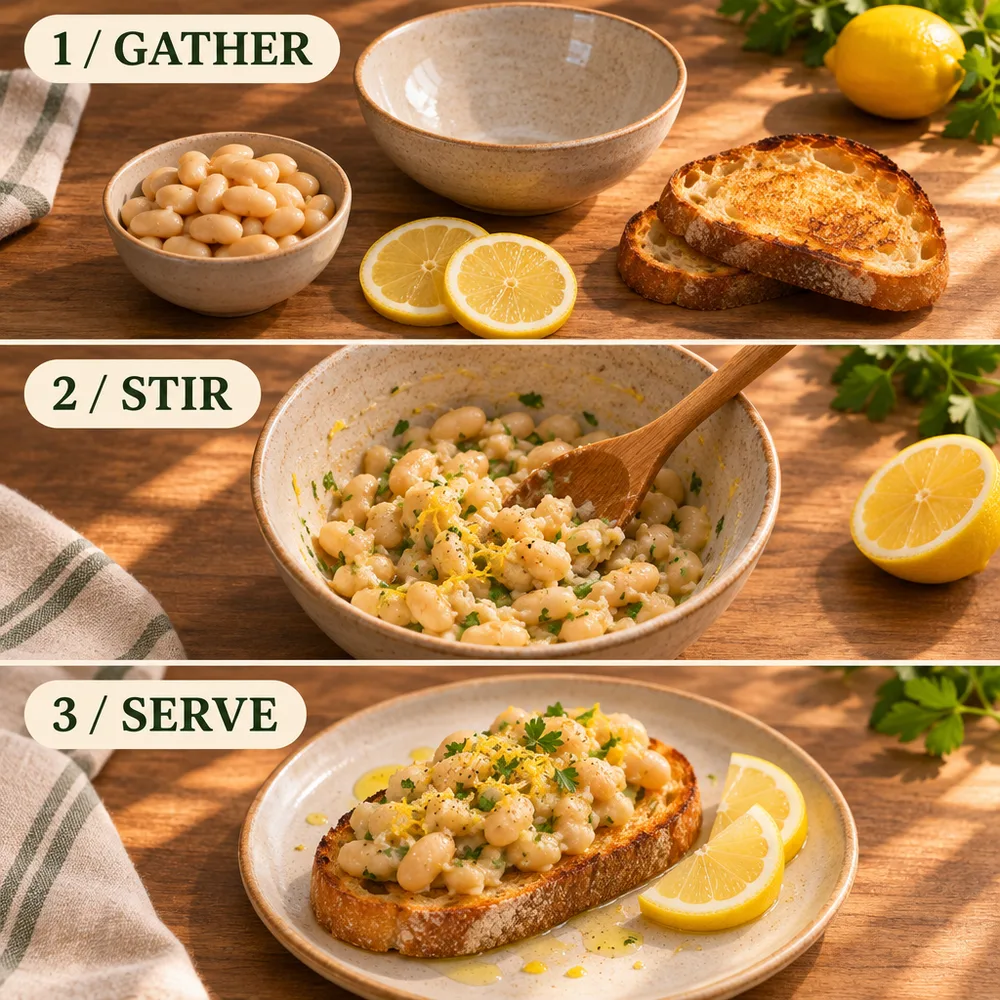
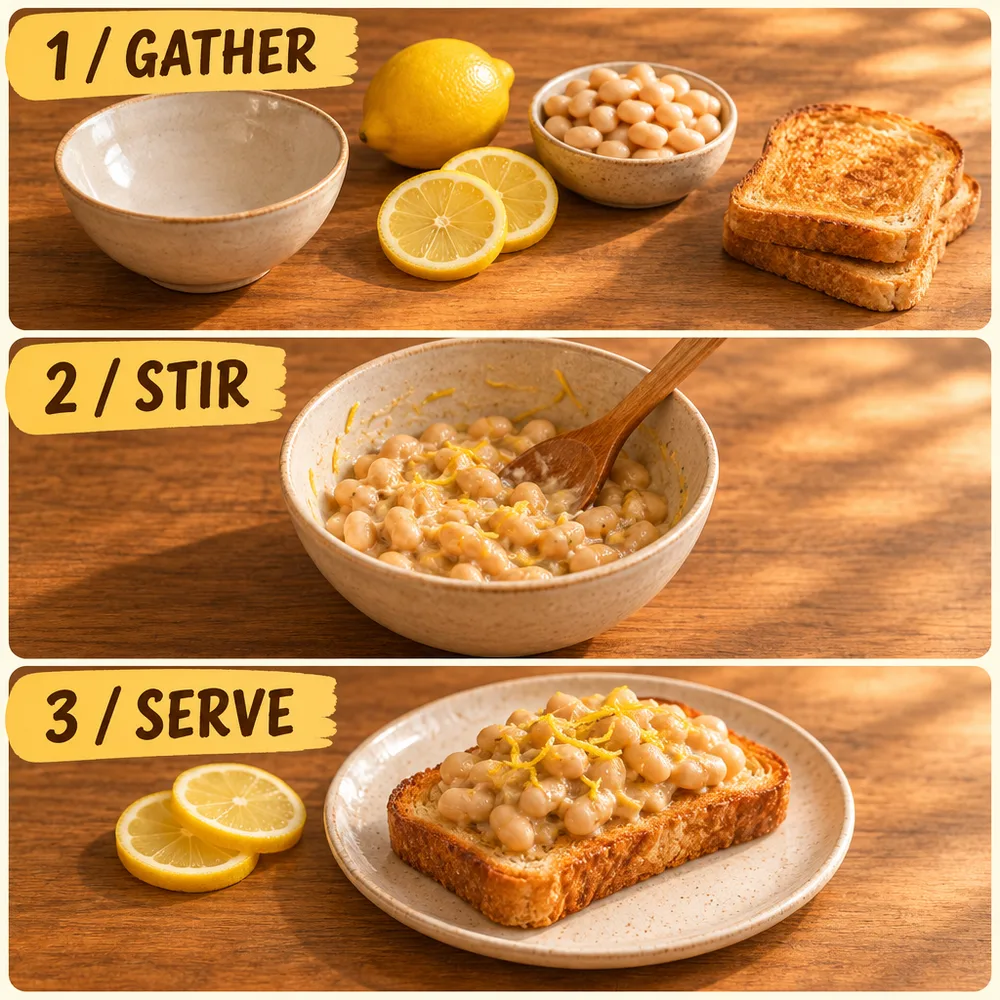
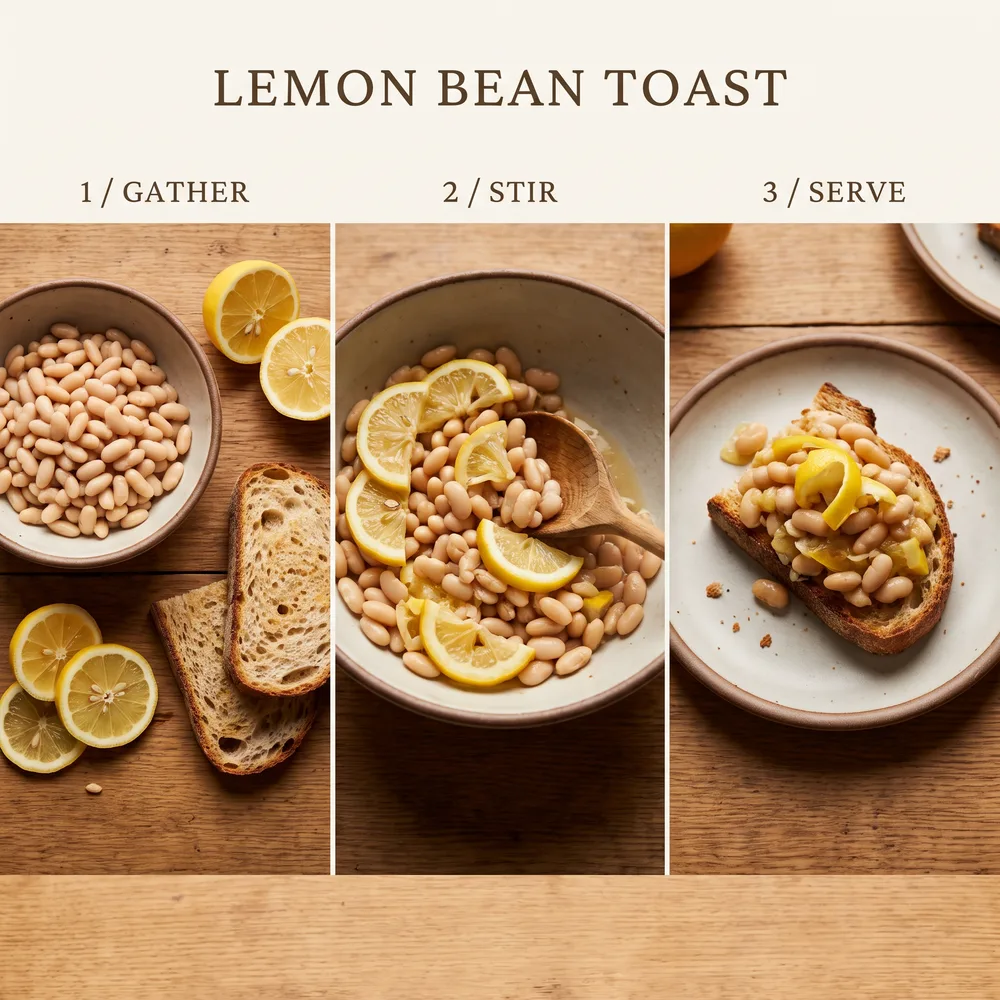
The tie hides two different mistakes. Sunburst and Flare kept to the three headings but put two bowls in the first panel. Nano Banana Pro used one bowl but added the title "LEMON BEAN TOAST" when the prompt allowed only the three headings.
Test 5: environmental portrait in a greenhouse
Make a 16:9 environmental portrait of an older adult gardener in a fictional community greenhouse, leaning lightly beside a worktable with terracotta pots in the foreground. Capture a candid side glance, leaf texture, morning haze and realistic mixed light. The subject is an ordinary adult, not a celebrity; show natural age lines, no readable signage, logos or extra people.
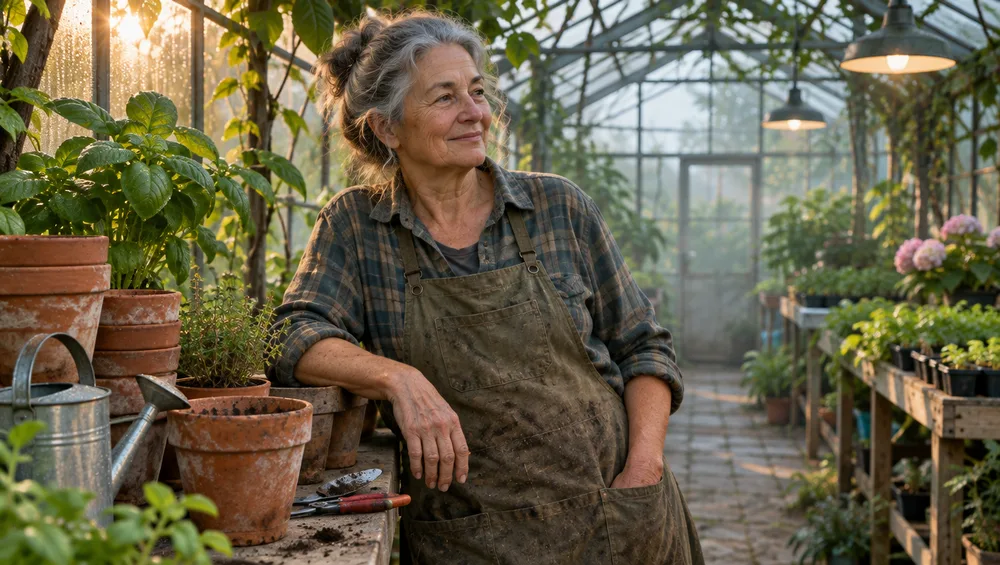
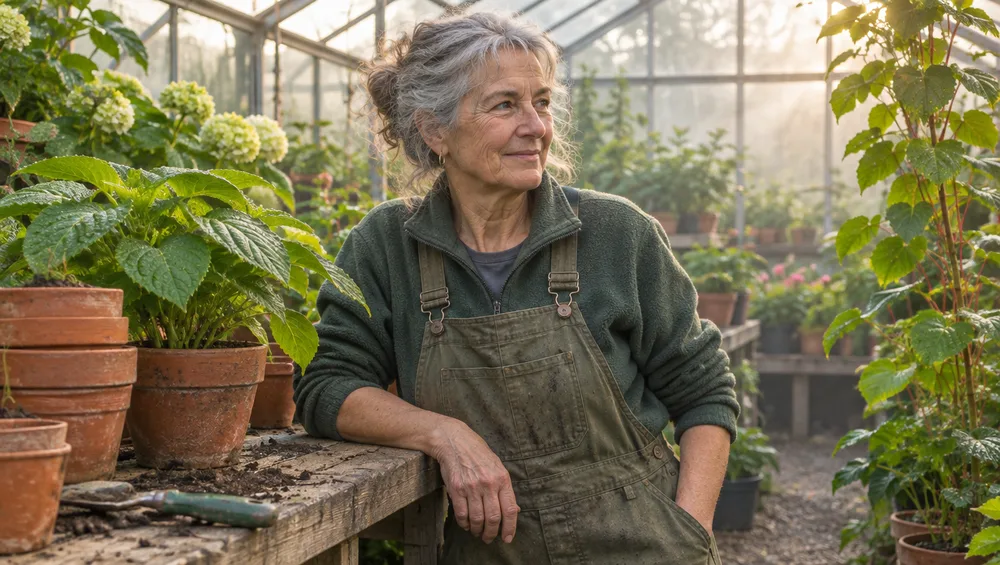
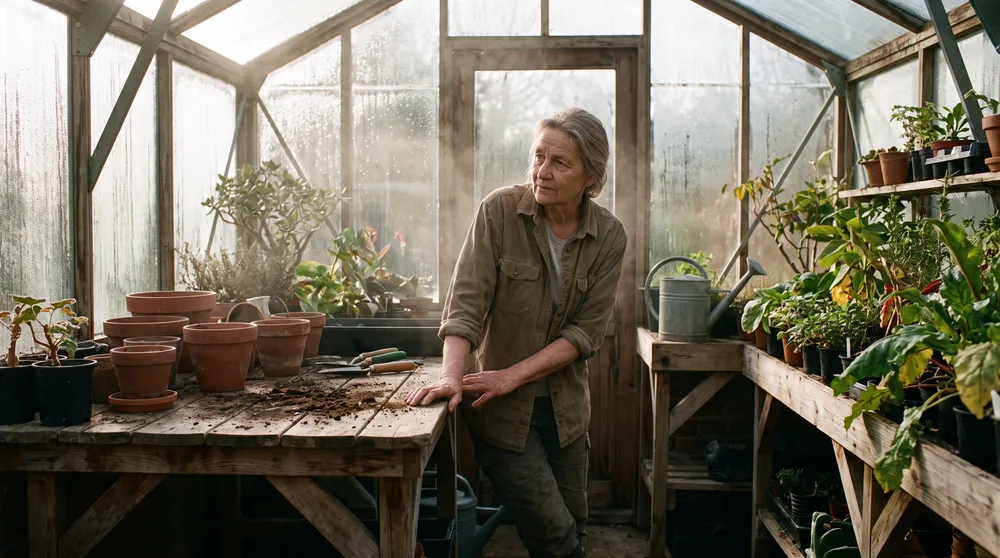
All three met every requirement. The difference is framing: both 2.6 models moved in close, while Nano Banana Pro placed the gardener further back in the room.
Test 6: 4×4 pixel-art sprite sheet
Create a 1:1 4x4 pixel-art sprite sheet of one original non-human clay creature performing a looping idle animation. Keep the same silhouette, colors, scale and baseline in all 16 cells; vary only blink, breathing and a tiny ear movement. Use a plain solid background for easy removal, no grid lines, labels, text, shadows or extra characters.
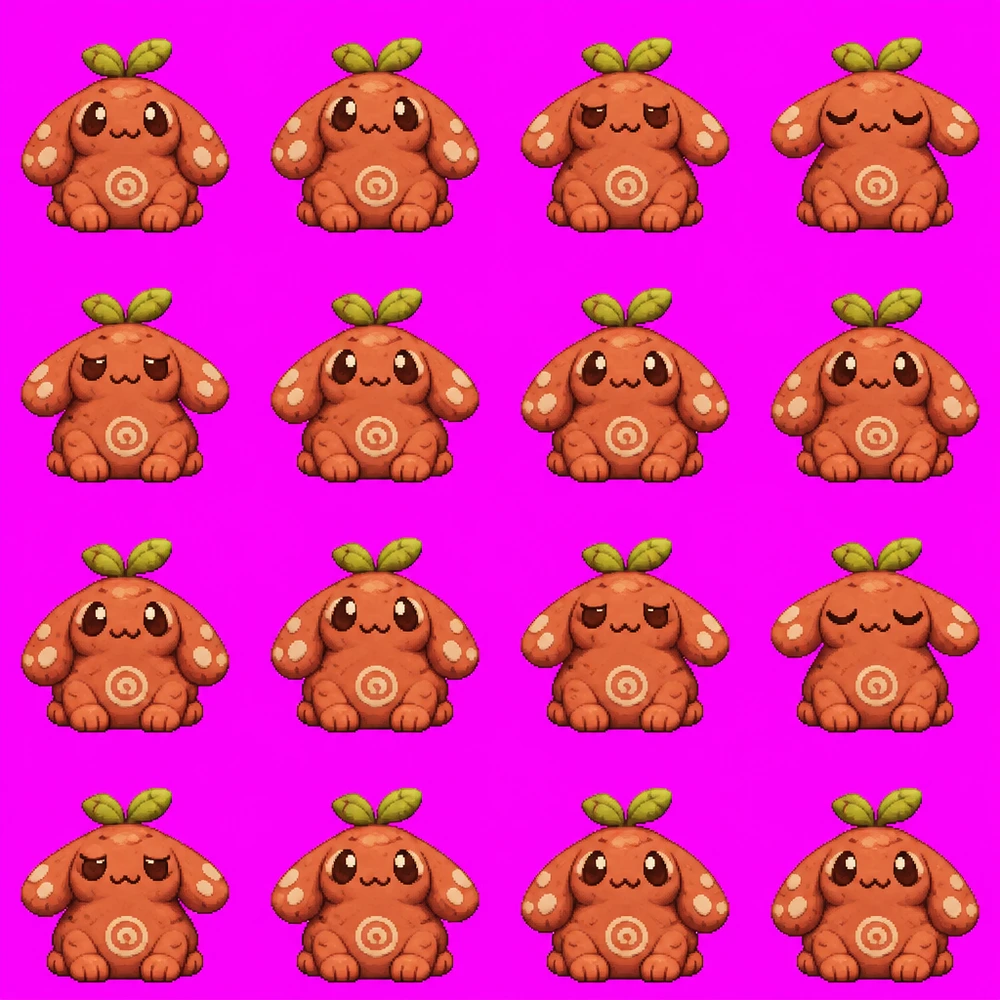
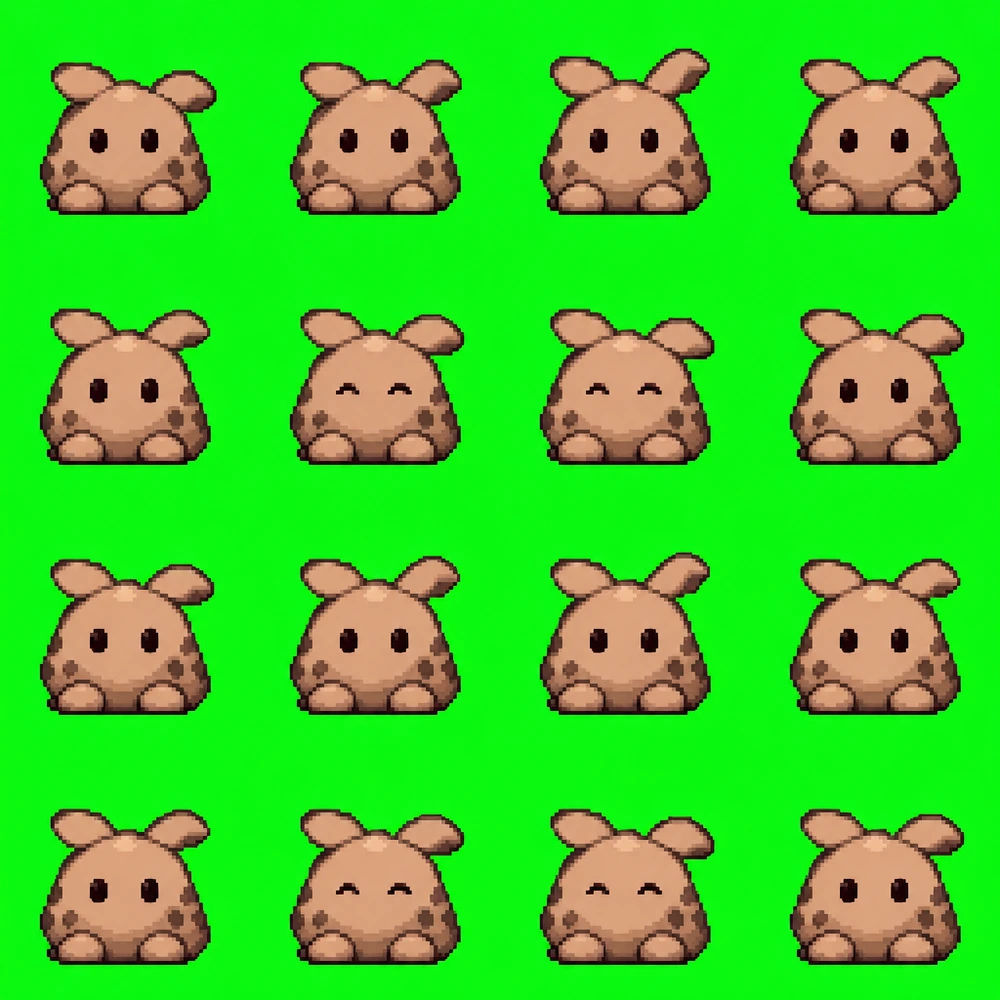
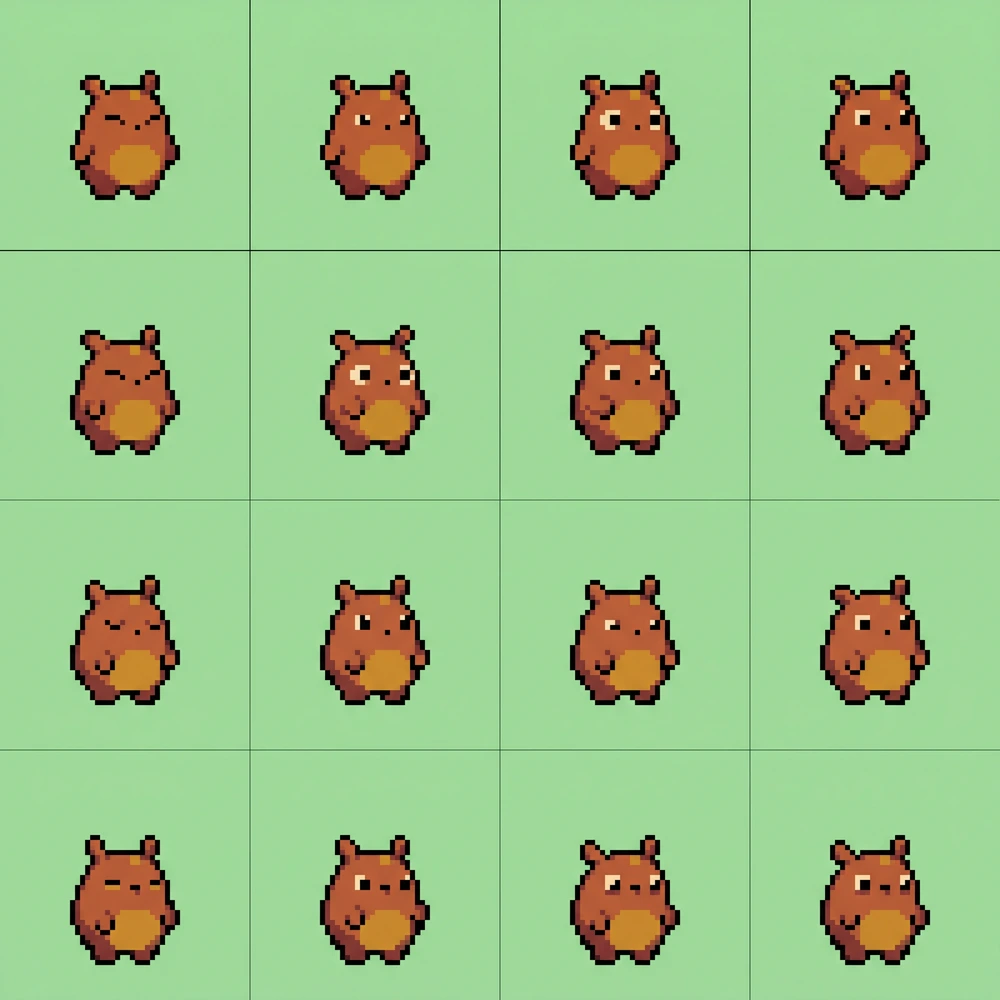
All three drew 16 consistent cells on a plain background. Nano Banana Pro added grid lines, which the prompt ruled out.
What the results suggest
In this set, Nano Banana Pro broke an explicit instruction more often: extra icons, an extra title, grid lines and a timetable in the wrong format. Flare gave up only one point to Sunburst while returning images in about 12 seconds. The portrait test was a tie, so the gap we saw is about following instructions and not about photorealism.
What changed in GPT Image 2.6
OpenAI released Images 2.6 on November 4, 2026 in ChatGPT, Codex and the API. It can return an animated GIF (2 to 64 frames) or an editable SVG straight from a prompt. In the API it ships as two models: GPT-Image-2.6 Sunburst for detailed work and GPT-Image-2.6 Flare for speed.
Compared with GPT Image 2.5, the release adds five things:
| Feature | What it does |
|---|---|
| Animated GIF | Turns a prompt or a photo into a looping GIF of 2 to 64 frames. In ChatGPT you can change the playback speed and edit single frames. |
| SVG output | Returns a vector file with real paths, shapes and colours. One SVG per request, no streaming. |
| Markup editing | You draw on a transparent layer over the image to show where the change goes, instead of supplying a mask. |
| Complexity control | A new complexity setting (low, medium, high, default high) controls how much the model changes. It has no separate fee. |
| Saved references | In ChatGPT you can save a reference image once and reuse it in later chats. |
The two API models share the same token prices. OpenAI positions Sunburst for "detailed visual work" with better consistency across edits, and Flare for fast iteration. OpenAI says Flare can return an image in as little as six seconds; it averaged about 12 seconds in our test through an API gateway.
Two limits are worth knowing before you build on it. The model pages list the Batch API as not supported, so the usual batch discount is not available yet. And OpenAI warns that a higher complexity setting can increase latency and "introduce unwanted changes". For small edits, start with low complexity.
GPT Image 2.6 vs Nano Banana Pro: documented differences
Nano Banana Pro is Google's Gemini 3 Pro Image model, released on November 20, 2025. This table uses only what each company documents.
| GPT Image 2.6 | Nano Banana Pro | |
|---|---|---|
| Released | November 4, 2026 | November 20, 2025 |
| Output formats | Still images, animated GIF, SVG | PNG, JPEG |
| Max resolution | Not stated separately for 2.6 | 1K, 2K and 4K |
| Aspect ratios | Not listed separately for 2.6 | 10 ratios, from 21:9 to 9:16 |
| Reference images | One or more; no published cap | Up to 14: 6 objects, 5 characters, 3 style references |
| Editing control | Markup layer plus complexity setting | Conversational, prompt-based editing |
| Text in images | Not detailed for 2.6 | Google calls it its best model for legible text |
| Web knowledge | Not documented | Google Search grounding |
| Watermark | Not documented for the API | SynthID on every image |
| Speed tiers | Sunburst (quality) and Flare (speed) | One model; Nano Banana 2.1 is Google's lighter option |
Two notes on this table. First, "not documented" does not mean "cannot". OpenAI's guide has not yet published a full size table or a reference-image cap for 2.6, so we leave those cells open instead of guessing. Second, Google's own documentation now recommends Nano Banana 2.1 for most new projects. Nano Banana Pro remains the choice for complex graphic design, product mockups and data visuals.
Independent rankings: still early
As of November 8, 2026, we have not found a stable independent ranking for Images 2.6. The early leaderboard figures we saw were described as preliminary. Our six prompts are one small data point, so the fairest test is still your own prompts run on both models.
GPT Image 2.6 or Nano Banana Pro: which one to use
| Your job | Better pick | Why |
|---|---|---|
| A poster or card with strict text and layout rules | GPT Image 2.6 Sunburst | Highest score in our layout tests |
| A looping sticker, reaction GIF or animated emote | GPT Image 2.6 | Native GIF output; Nano Banana Pro has none |
| A logo, icon, cut file or anything that must scale | GPT Image 2.6 | Native SVG output |
| Fix one area of a photo without touching the rest | GPT Image 2.6 | You can draw exactly where the change goes |
| A large poster or print at 4K | Nano Banana Pro | Documented 4K output |
| A group scene that must keep several real people's look | Nano Banana Pro | Up to 5 consistent characters and 14 references |
| An infographic or map that needs current facts | Nano Banana Pro | Google Search grounding |
| Many quick drafts | GPT Image 2.6 Flare or Nano Banana 2.1 | Both are built for speed; Flare averaged about 12 seconds in our test |
One practical point about GIFs: a 2.6 GIF is capped at 64 frames and has no sound. If you want a smooth, longer clip of your photo with real camera movement, an image-to-video model will do more. You can try that with the AwakePix image-to-video generator.
Can I use GPT Image 2.6 on AwakePix?
Yes. As of November 8, 2026, GPT Image 2.6 Flare and Sunburst are available on AwakePix. Create with GPT Image 2.6 for text-to-image or editing with one reference image. Sign in with a verified email for one free image daily; availability may vary at peak times. Paid generation offers 1, 2 or 4 images at 10 credits each, with 1K PNG output. GIF, SVG, transparency, markup editing and multiple reference images are not enabled in this integration.
You can also try GPT Image 2.5's free preview, Nano Banana 2.1, or compare models in the image-to-image tool.
AwakePix is an independent platform and is not affiliated with or sponsored by OpenAI or Google.
FAQ
When was GPT Image 2.6 released? OpenAI announced Images 2.6 on November 4, 2026, for ChatGPT, Codex and the API.
What is the difference between GPT Image 2.6 Sunburst and Flare? They share the same price per token. Sunburst is aimed at detailed images and consistent edits; Flare is aimed at fast iteration and can return an image in about six seconds.
Can GPT Image 2.6 make GIFs? Yes. It can create animated GIFs of 2 to 64 frames from a prompt or a photo. In ChatGPT you can also change the speed and edit single frames.
Can GPT Image 2.6 export SVG? Yes. The API can return an editable SVG, one file per request. Streaming is not supported for SVG.
Can Nano Banana Pro make GIFs or SVG files? Google's documentation lists PNG and JPEG output only, with no GIF or SVG option.
Is GPT Image 2.6 better than Nano Banana Pro? In our six-prompt test, GPT Image 2.6 Sunburst scored 22 out of 24, Flare 21 and Nano Banana Pro 18, mostly because 2.6 followed layout and "do not" instructions more closely. Nano Banana Pro has the documented edge for 4K stills, many-reference scenes and fact-based graphics, which we did not test.
Which is faster, GPT Image 2.6 or Nano Banana Pro? In our test, Flare averaged about 12 seconds, Sunburst about 34 seconds and Nano Banana Pro about 35 seconds per image. Your timing will vary with the route, settings and load.
Sources: OpenAI, GPT-Image-2.6 Sunburst model page; OpenAI, GPT-Image-2.6 Flare model page; OpenAI image generation guide; OpenAI Developer Community, "Introducing ChatGPT Images 2.6"; Google, "Introducing Nano Banana Pro"; Google AI Studio, image generation docs; Google AI Studio, Gemini 3 Pro Image model page. Specs checked November 4, 2026; prompts tested November 8, 2026.